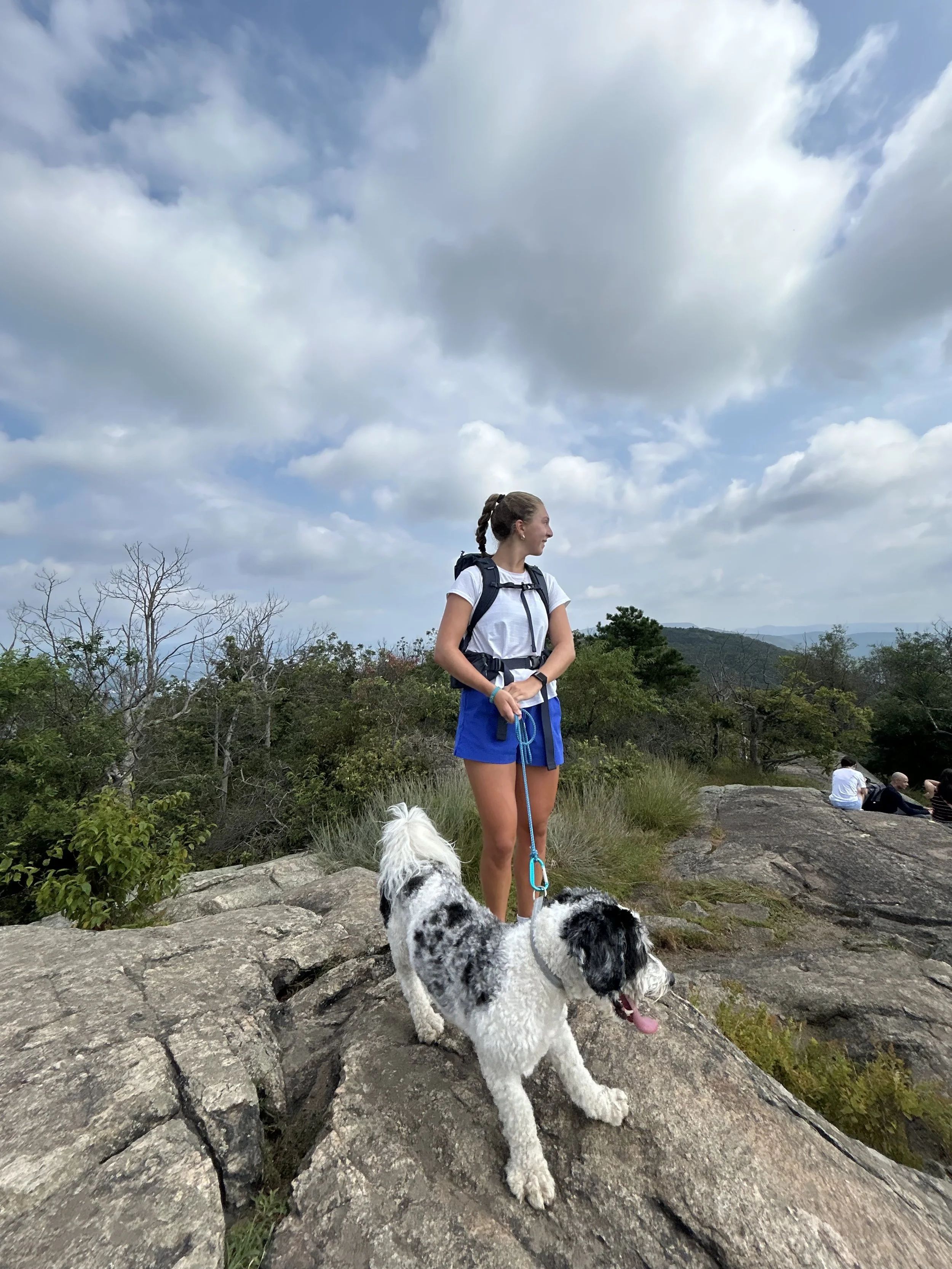
By Carly Robinson | IG: @carly_robinson._ & @morgansmessagewesleyan
A poem I recently read that has stuck with me:
"I am very goodat being vulnerableIn the past tense
I can tell you what hurt me once I've found something intelligentto say about it.
I can show you the scartell you what it taught me,even laugh at how i got it
but don’t ask mewhere it hurts now
I haven’t figured outhow to make thatsound beautiful yet.”
Instagram: @notprettyjusthonest
I have been following Morgan's Message and listening to the Mental Matchup for over two years now. Oftentimes I would think to myself, wow, I can't wait until I am through with struggling and can tell my story, but that is an incredible burden that I cannot allow myself to carry. Hearing the stories of what people have overcome on the Mental Matchup has helped me immensely. There are many people who have been on the podcast who have shaped the way I think; both when I am struggling and in everyday life. I was always most interested in their actual story, the ones who came on and shared the raw version of their struggles. There were only a few who mentioned the ongoing effects. I started to put this expectation on myself that mental health struggles were a one off – a story that is supposed to be told in the past tense. Each time my mental health relapsed I was angry at this seemingly never ending cycle, because I felt that I was struggling past my mental-health-due-date. It made it increasingly impossible to feel that I would ever get better.
I have struggled with mental health from a very young age. During my last two years of high school I struggled heavily with generalized anxiety and depression. I dealt with ongoing panic attacks to the point where I couldn't get through the school day without one. I was incredibly alone, not because people didn’t want to be there for me, but because I didn’t know how to talk to them. I pushed people away who wanted to help because that felt most natural to me. As a result, I lacked the support system I needed, and quite frankly just needed a hug so badly.

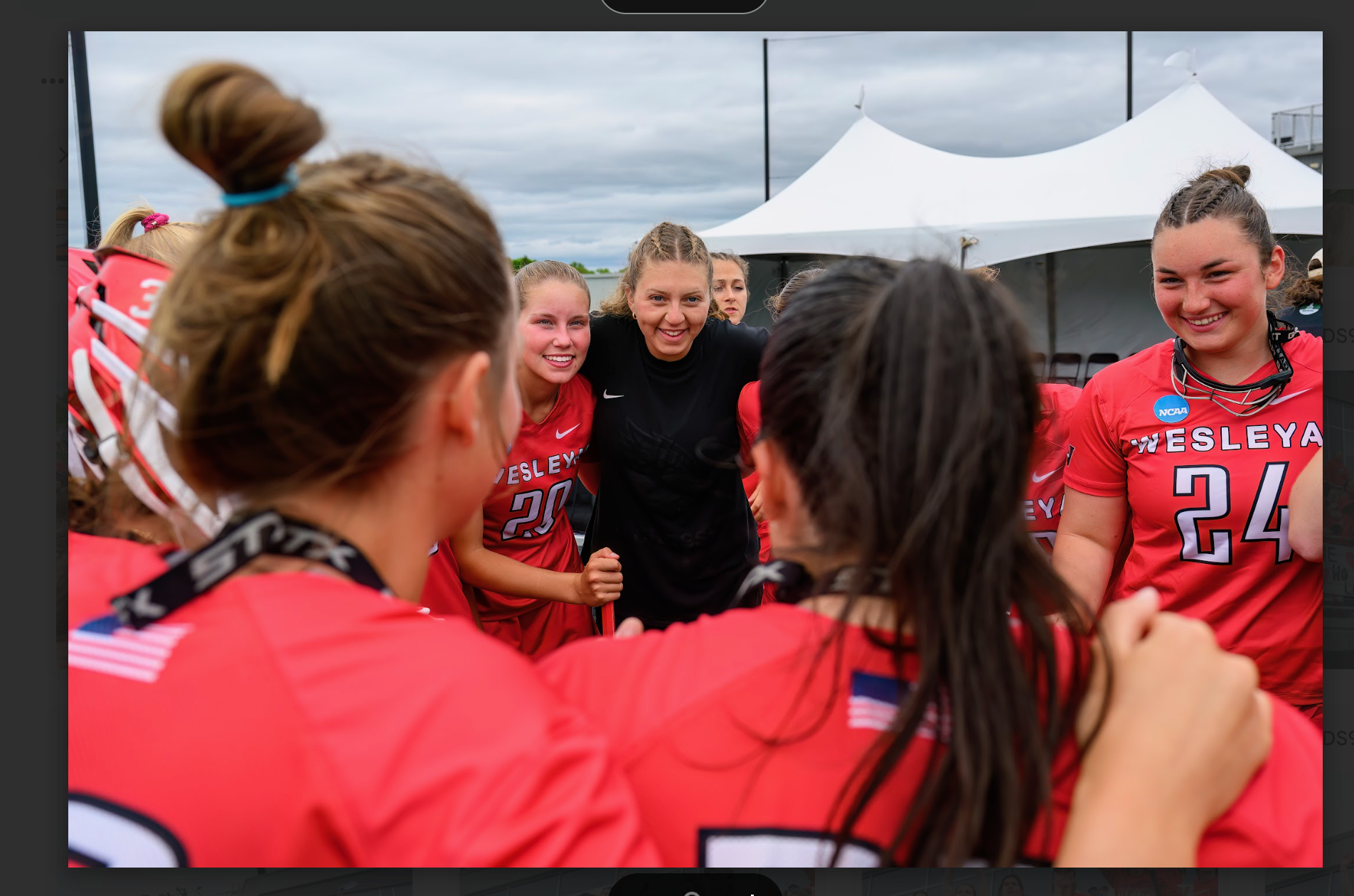
During my freshman year of college I had the most perfect fall semester. I loved my classes, I truly had the most incredible team that I still can't even believe I get to be a part of, I have amazing coaches, an incredible community, and the greatest friends and teammates imaginable. These things all held true for my spring semester, except my mental health plummeted. Lacrosse season started in the beginning of February. I had a sudden onset of intense anxiety that triggered memories of my high school years. This went on for two weeks until I started having panic attacks again. I eventually broke down to one of my closest friends. I knew my coach would react better than my high school coaches if I told her what was going on, but my friend assured me that she would truly be a person of support. The next morning I went to talk to her and she was, and continues to be, a person of incredible support. I feared a regression to my condition in high school; unruly anxiety and panic attacks that silently disrupted my academics and athletics. I realized that I couldn't take this on alone again. At a team meeting months prior, one of the seniors on my team opened up briefly that she struggles with depression and anxiety. I kept that in the back of my mind. I decided to reach out to her. Though I was not at all close with her, sending that text was the scariest, bravest, and best thing I could’ve done. The story I had made up in my head that she would be bothered, confused, or awkward became evidently untrue. As someone who was struggling, it was hard to believe that people would be so eager and willing to help.
The panic attacks became more frequent and violent, and I was no longer as high functioning as I had been. At the end of March, when I thought I had hit my lowest, I suffered a rare stress fracture to my femur that put me on crutches for over a month, taking away any coping mechanism or source of relief I had left. The fracture was so rare that the doctors were speculating about bone cancer or some underlying factor. This led to a series of tests and doctor's appointments far from campus, further isolating me from my team and any sense of normalcy. Not long after, I had a plan to take my life. I have struggled before, but I always believed that I would never take my life. I am an incredibly happy person who appreciates the world so loudly. The thoughts and feelings came on so suddenly, and they were aggressive. I felt that these feelings of suicidal ideation had taken away all that was left of my true self, and that I had completely lost myself to this mental health battle.
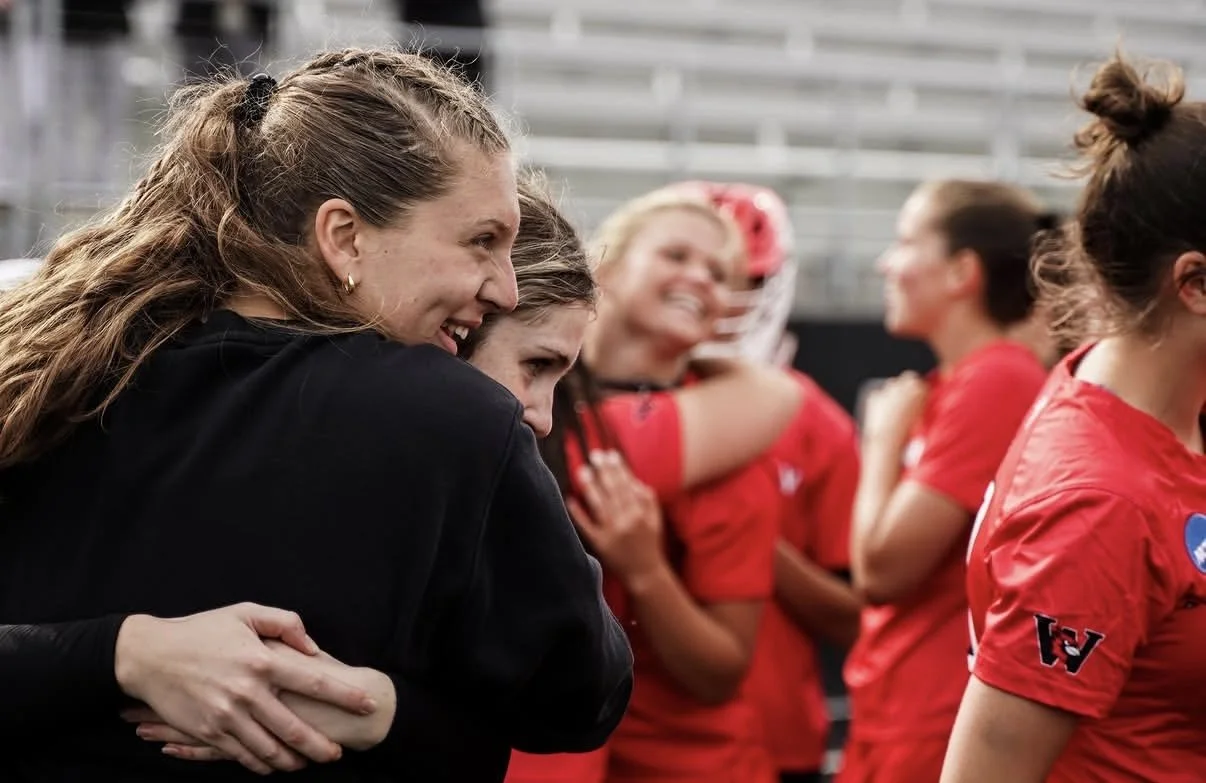
During this time I learned how to advocate for myself and ask for help. The senior I reached out to became my rock, my support system, and my role model in the darkest time of my life. She always knew what to say, and those words often chime in my head when I’m going back to a dark place. More importantly, she held me during panic attacks for so many days, I cried in her arms many times, and slept in her bed when things were especially scary. I was the kid who never cried in front of their parents, who never hugged her friends, and who was terrified to show emotion, but I would not be here today if I didn’t decide to change that. My relationship with her and my coach taught me vulnerability and how to advocate myself. These lessons ultimately led to me to open up and advocate to my parents. If not for the struggles I faced, my relationship with my parents would not be as good as they are now.
This is where I tell you that this was only a few months ago. I had an incredible summer working and being outside. I wanted to counteract what I went through in the spring with only positive feelings in the summer so that those horrible thoughts and feelings would never return. Coming back to school I put immense pressure on myself to make sure that events like last spring would never happen again, unconsciously I was ashamed and felt weak. I decided that last semester had to be a one off and I had to make a huge “comeback”. I am taking a very heavy academic course load, I have a leadership role in a research internship, I am still rehabbing the injury I suffered in the spring, and still attend all team practices. I felt like I had time to make up for. I was excited to finally tell my story and how I got past it, and I was thrilled to be telling everyone how great I was doing. I even started a Morgan’s Message chapter to share with everyone. But to be truthful, coming back to school was daunting, I had no idea how my brain was going to respond. I was still on the sideline of practices and I still was being disappointed by my injury. Academics are hard and I wasn’t having the comeback that I wanted and expected.
Two weeks ago I broke down at physical therapy and realized I was incredibly overwhelmed and feeling anxious. I had it in my mind that I was no longer going to write this because I hadn’t conquered my battle yet. As I do when I am struggling, I open up the Mental Matchup. This time instead of going to the most recent one, I did a random scroll and ended at Leanne Pissaro’s episode from 2024. She said, “it’s one thing to share your story after the fact, but it's another thing to say it while you’re struggling and admit what you're going through.” That completely changed my point of view. As someone who lives with diagnosed anxiety and depression, waiting around for the day where I no longer struggle would leave me constantly disappointed. Instead, I have been learning how to live alongside it these past few months. During hard weeks, that same teammate always told me that the day wasn't going to be perfect – people like us who struggle with mental health will always have these experiences as a factor of our lives, but that it isn't a bad thing. It’s something that I am now really proud of. It has taught me empathy, vulnerability, advocacy, and made me the best version of myself.
I am very much still struggling. This week I've been in the darkest place I’ve been since last spring, but I proactively reached out to my support system and followed the plan I have in place for when my brain goes to those scary places. I tell you that not to show what I have gotten through, but to speak on the experiences I’ve learned along the way. So yes, I am a high achieving student-athlete, I have a somewhat overwhelming family life, and my injuries have taken a great toll on me, but that is not my whole story. Student athletes can have mental health conditions without having it be because of sport, performance, or pressures. Those two worlds do interact though. I want to speak on all of those experiences to show people how I live alongside it, because sometimes the mountain can't be moved, it becomes a part of a beautiful view.